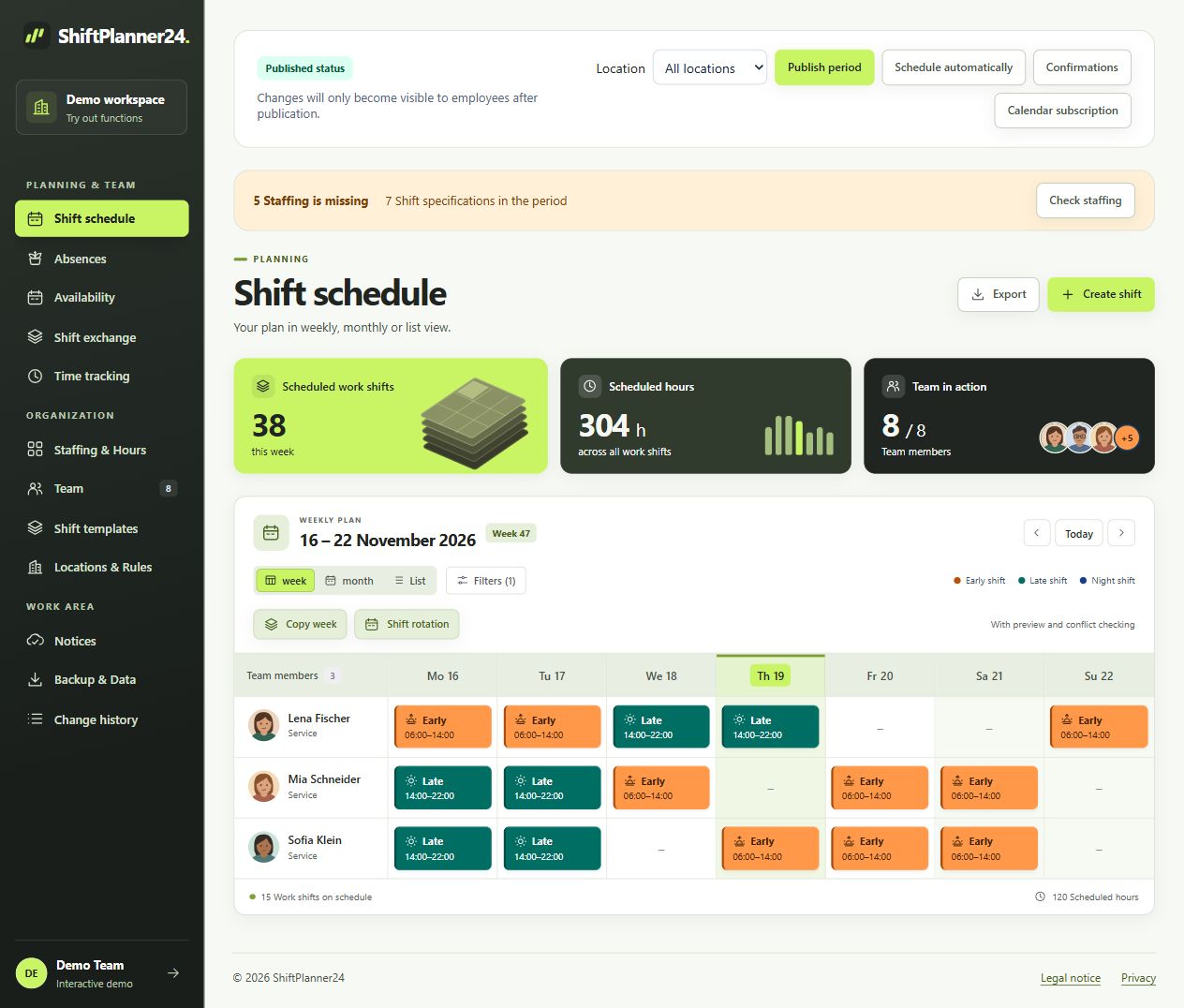
Start with tasks and time slots
First write down what work needs to be done and when. Opening hours alone rarely fully describe the need. Preparation, handovers, cleaning, documentation and final work also take time. Distinguish areas and qualifications so that a sufficiently large overall staffing does not cover a gap in an important position. A good shift plan therefore not only shows names, but also responsibilities.
A simple example: A store needs two people in sales and one person to receive goods in the morning. This distribution can change at midday. Explicitly set such time slots instead of distributing the entire daily staff evenly. Compare your assumptions with the actual workload later. Recurring deviations are a reason to adjust needs.
Clarify availability before distribution
Record agreed working hours, approved vacation, training and known absences before assigning individual services. Also check which tasks someone can take on and what training is still missing. A person can be available for a certain amount of time and still not be considered for a particular assignment. This distinction prevents avoidable reassignments shortly before the start of the shift.
Establish an understandable path for desires. A wish book for the roster can work as long as the submission deadline, responsibility and feedback are clear. Digitally stored desired times make the information easier to find. Wishes must be distinguished from confirmed promises. Explain to your team when feedback will be given and what reasons might prevent it from being taken into account.
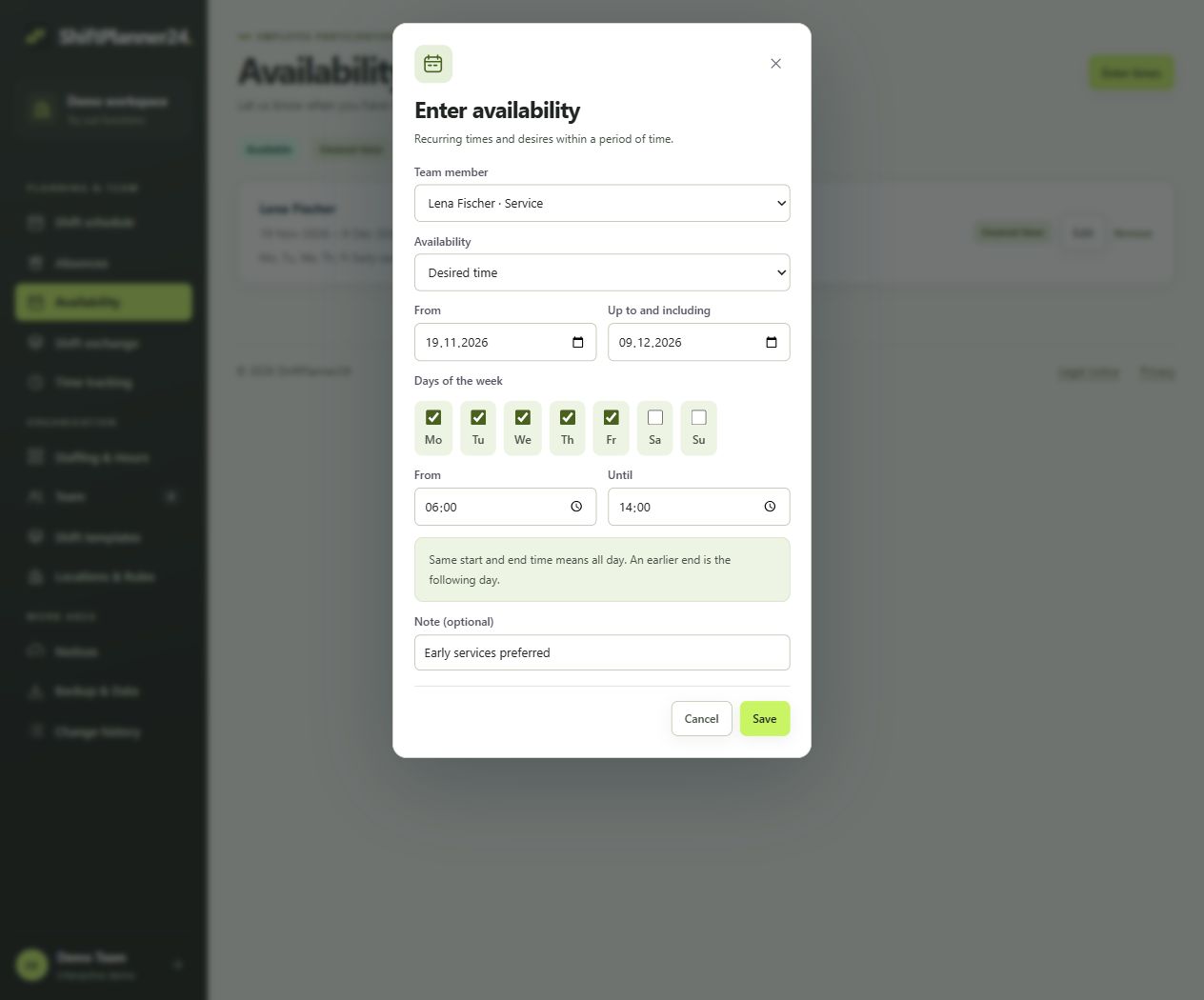
Check fairness using visible rules
An employee-oriented roster takes into account different contract scopes and personal conditions. Equal service numbers are therefore not automatically fair. For example, consider weekends, last-minute changes, and popular days off across multiple planning periods. A single month can be distorted by vacation. Document mutually agreed compensation rules so that decisions remain comprehensible.
Discuss conflicts based on these rules, not based on perceived commitment. Anyone who steps in voluntarily should not have to derive any lasting obligation from it. Also note which decisions planning can make and when a manager is involved. Transparent escalation is particularly helpful when several legitimate requests coincide with an unchangeable need for staffing.
Consider shift sequences and recovery together
Always check services in the context of the previous and following days. The BAuA recommends, among other things, the shortest possible night blocks and a forward rotation from early to late to night. A visually uniform distribution can still contain unfavorable changes. Therefore, include the actual times and also control transitions between two monthly plans.
A flexible roster design requires limits. Don't automatically use days off as an invisible reserve and take breaks into account when staffing. If a break is only possible while a necessary workstation remains unoccupied, the planning is not yet complete. An acceptable shift sequence depends on the workload, opportunities for relaxation and the applicable regulations.
Control the draft systematically
Separate an editable draft from a published plan. This means that everyone can see which version actually applies. First check the staffing in each area, then the personal service sequences and finally the distribution of hours and unresolved requests. This order prevents a pretty monthly overview from masking fundamental problems. Mark open decisions clearly and do not distribute incomplete interim results as a finished roster.
A uniform roster legend makes control easier. Define abbreviations for early shift, late shift, vacation or training and store the corresponding times. Colors support orientation, but should not carry the only information. Even an expression without color must remain understandable. Changes to abbreviations belong in the same coordination as changes to shift times.
Checklist for roster design
Use the same checklist before each publication: Is the time period clear? Are all areas and required qualifications filled? Are the beginning, end and breaks correct? Are approved absences taken into account? Have overlaps, shift changes and hour distribution been checked? Have open wishes been answered? Have any special deviations been clarified? Does the team know the release time and the valid information channel?
Only add checkpoints that belong to your company. A short, actually used roster checklist is more helpful than a lengthy, unaccountable document. Assign a responsible person to each open item. Don't release the plan until that person makes the decision. In this way, inspection becomes a work step instead of a mere formality.
Communicate changes in an understandable manner
A reliable roster requires a regulated way of dealing with failures. Define who is seeking representation, what information is needed, and how a change will be confirmed. A shift swap should not only be agreed between two people, but should also be checked for the rest of the staff. Relevant participation rights and binding regulations remain to be observed.
Avoid multiple competing versions in chats, notices and tables. Specify a binding plan status and mark updated printouts with the date. After making major changes, discuss why they were necessary. If similar bottlenecks accumulate, there may be a structural problem with demand or replacement. This problem cannot be permanently solved with additional messages.
Implement the process with ShiftPlanner24
In ShiftPlanner24 you can combine personnel requirements, qualifications, availability and absences. Rule-based planning suggestions are initially displayed as a preview. You check the result and decide whether to take it over. Draft and publication remain separate; Employees can confirm their personal plan. The software supports your process, but does not replace a professional assessment of staffing.
Then compare planned hours with released actual times. This review shows where your assumptions should be adjusted. Try the process out for a manageable week first. A demo and a free trial period of 30 days are available. After that, the booked use costs 19 euros per month including VAT; A subscription is only created through express booking.
Set a specific goal for the test, such as fewer unclear services before publication. After each week, note which information was available too late and which decisions had to be made multiple times. Then adapt exactly this step. Such a small cycle of improvement gradually makes the roster design more resilient. It also helps new planners adopt the process because rules and responsibilities are documented and do not remain permanently in the mind of a single experienced person.
Sources and further information
Editorially reviewed on November 18, 2026.